Get help now
  0300 111 6000
  My account

Our advice if you’re living with an eating disorder at Christmas
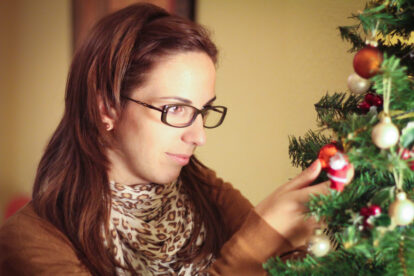
While Christmas is a time of celebration, it can often be a difficult period to navigate for people living with eating disorders.
Here, Melanie Purves, who leads our Eating Recovery Service, has shared guidance for those living with eating disorders and their loved ones to help them enjoy the festive period feeling happier and healthier.
Christmas brings with it an increased exposure to indulging, tied in with changes to daily routines, leading to a greater risk of harmful behaviours for those living with eating disorders – whether that’s anorexia or a binge eating disorder.
Melanie said: “People living with eating disorders – whether that’s anorexia or a binge eating disorder – have this universal pre-occupation with weight, shape and size.
“So when you have a society which suddenly becomes focused on those things, like at Christmas, it can be really triggering and challenging for people.
“Common triggers include adverts on TV and social media and an increase in conversation around food in general, whether that’s with loved ones or in the workplace.
“Food can become an arena for complicated relationships, so it’s all about making sure people have space, control and autonomy they need to best look after themselves.”
Her five key pieces of advice for managing an eating disorder
Identify your triggers
Knowing what your triggers are means it can be easier to avoid them, or prepare you for how best to cope with them when you are exposed to them, through whichever strategies work best for you.
Create a plan
While it’s important to stick to your normal routine as much as possible, the social events over Christmas add new uncertainty. Setting reminders on your phone to take a break from social gatherings can help get you away from stressful situations – and remember that it’s ok to say no to events, whether that’s declining an offer of lunch in favour of seeing people in the evening instead.
Speak with your trusted friends and family
Talking with people you trust can help set expectations and prevent the chances of any triggering or tricky situations from arising. This could be choosing your own seat at the dinner table, dishing up your own plate, having a safeword to give you time away from the table either for a chat or some time on your own.
Practice self-care
Genuine self-care is so important to mental health. Keeping your own emotional and physical needs in mind can steer you away from making those harmful decisions. It’s also important to avoid excessive alcohol consumption as an unhealthy coping mechanism.
Enjoy the other things Christmas has to offer
There is so much to enjoy at Christmas besides the food. This could be joining in a carol service, watching your favourite festive films with your comfies on or going out and enjoying a nice winter walk.
More information around eating disorders – including help on how to self-refer to our Eating Recovery Service – can be found here.
National eating disorder charity BEAT is also running its free helpline from 4pm to 8pm from December 24 to January 1 on 0808 801 0677.