Get help now
  0300 111 6000
  My account

Living with Loss, coming together to talk about life after a relationship loss
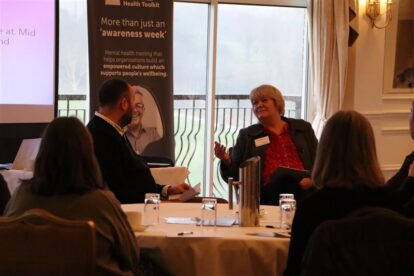
“Often, when you lose somebody, it can bring a lot of other stuff up too,” said Lou Brewster, and that single sentence stayed with many of us long after last Thursday morning.
What is the danger of relationship loss for our mental health?
Statistically, when we lose someone close to us to suicide, we are more at risk of thoughts of suicide ourselves.
The loss of an emotional connection is one of the biggest risk factors to suicidal thoughts and poor mental health, especially for men.
Divorce rates are nearly at 50%. Divorce isn’t only about losing that main emotional connection with your spouse. It can often lead to relationship breakdowns with children, or even estrangement, as well as relationships with mutual friends and your spouse’s family.
What was the Living with Loss event about?
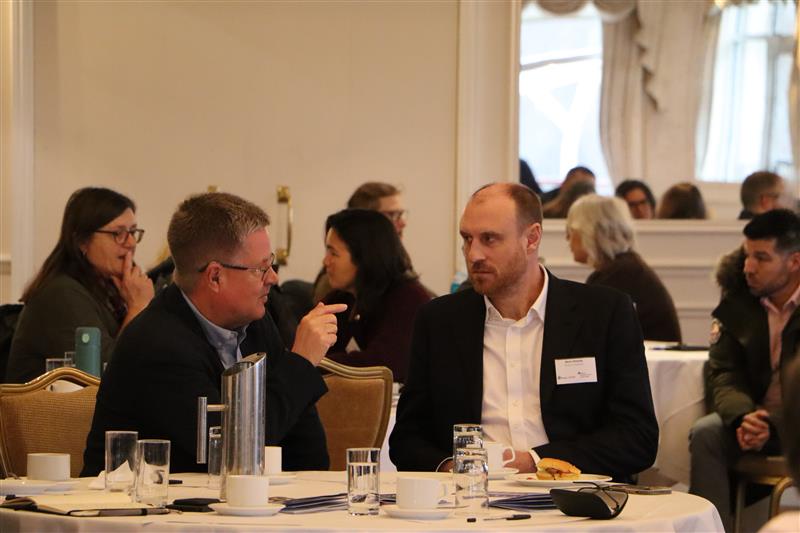
We were proud to welcome so many people to Stoke-by-Nayland for our recent Living with Loss event, delivered in partnership with Mid and North East Essex Mind. It was an event that held space for honesty, emotion and practical support, the kind of conversations that can be hard to start, but even harder to ignore.
The morning opened with Ezra, who set the scene by gently but clearly exploring the realities behind mental health, suicide, bereavement and relationship breakdowns. The statistics highlighted why events like this matter.
We then heard from Lou Brewster, a retired senior mental health nurse, who shared her personal experience of losing two close friends to suicide, alongside the loss of her dog and the breakdown of a relationship, all within a matter of weeks. Her stories were raw, compassionate and deeply human, moving the room between laughter and tears.
The practical moments came as the whole room took part in practising reflective listening, learning what good quality attention really looks like. No fixing, no rushing, just being present with someone else’s story.

The event closed with an eye-opening talk from our sponsors, Birketts LLP, who explored the legal realities of divorce, the stark difference between ‘married’ and ‘not-married’ and relationship breakdown. It offered a different lens on relationship loss, and left many people reflecting on how emotional and practical challenges often coincide.
What do we need to know about relationship loss?
Throughout the event, several key messages stood out.
Even people who are physically surrounded by others can feel deeply lonely, which is why checking in still matters.
For someone who feels stuck in pain, suicide can begin to feel like a solution, but it is a permanent answer to temporary suffering, and things can change. Looking towards the future, even gently, can shift the perspective of someone trapped in the present moment.
The first 12 months after a bereavement or relationship loss are especially important. Keep inviting people, even if you expect them to say no, the inclusion keeps them connected.
Being with people, moving your body, and slowly accepting what has been lost can all help.
And, perhaps most importantly, there is no timeline for grief. It is not linear, it does not behave in the same way for each person, and it does not end neatly.
What support is out there for me after a relationship loss?
If this event stirred something for you, or if you are supporting someone through loss, help is available. We offer support for anyone bereaved by suicide, as well as access to counselling services for anyone struggling with grief, mental health, or relationship breakdown.
You do not have to carry this alone. Reach out, check in, or take the first step towards getting support today.